-
0
Introduction and Overview
00:00 - 00:33
-
1
Prosthetic Treatment Planning and Protocol
00:34 - 01:16
-
2
Clinical Case Study: Comprehensive Prosthetic Approach
01:17 - 09:25
-
3
Flap versus Flapless Surgical Techniques
09:26 - 13:16
-
4
Flapless Implant Placement with Guided Surgery
13:17 - 17:59
-
5
Healing, Restoration, and Long Term Results
19:53 - 20:21
-
6
Conclusion: Knowledge as the Essential Differentiator
20:46 - 20:57
- 7 Community questions
Esthetic Implant Treatment Planning: Fundamentals for Predictable Outcomes
Video highlights
- Prosthetic planning must come before surgery, treatment starts with a wax mock-up, not the implant.
- Digital tools (face scan, STL, CBCT, AI software) let clinicians preview occlusion and TMJ response before committing to anything irreversible.
- Four interfaces (prosthetic, esthetic, soft tissue, and bone) must all be managed for lasting esthetic and biological stability.
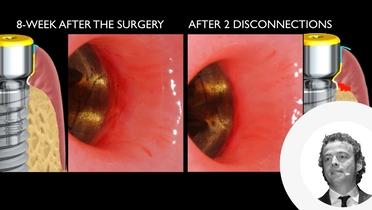
- A 15-year GBR case shows how disrespecting the soft tissue barrier at implant level leads to long-term bone loss.
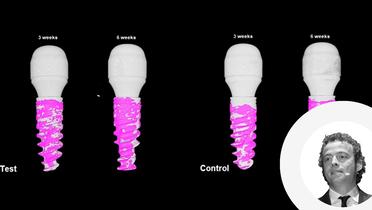
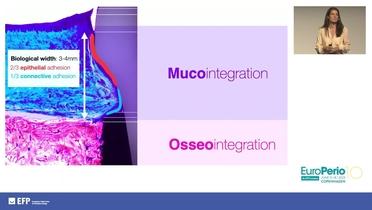
- Abutment-level integration (placed once, never removed) preserves the hemidesmosomal barrier and drives better soft tissue outcomes.
In this lecture, Dr. Giacomo Fabbri explores the fundamentals of esthetic implant treatment planning and the principles that support long-term success in implant-supported restorations. He explains why prosthetically driven treatment planning should precede implant placement and demonstrates how comprehensive patient assessment, including dental, facial, and functional analysis, helps create predictable esthetic and biological outcomes.
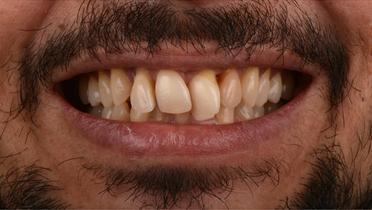
The lecture examines modern digital workflows in implant dentistry, including face scanning, STL files, CBCT imaging, artificial intelligence-assisted planning, and 3D-printed mock-ups. These technologies enable clinicians to evaluate occlusion, vertical dimension, and functional adaptation before irreversible treatment begins. Clinical cases illustrate how prototype restorations can improve communication between the clinician, laboratory technician, and patient while validating treatment decisions.
Dr. Fabbri also discusses the four key interfaces that influence implant-supported restorations: the prosthetic, esthetic, soft tissue, and bone interfaces. Special attention is given to soft tissue management, gingival margin positioning, immediate versus delayed implant placement, flap and flapless surgical approaches, and guided bone regeneration in complex defect cases.
The presentation concludes with contemporary concepts of abutment-level integration, preservation of the soft tissue seal around implants, flapless guided surgery, and definitive zirconia restorations. Through long-term clinical follow-up cases, Dr. Fabbri demonstrates that while digital technologies continue to evolve, sound clinical knowledge remains the foundation of successful implant therapy.
Key learning objectives:
After watching this lecture, you will be able to:
- Understand the principles of esthetic implant treatment planning and their impact on long-term clinical outcomes.
- Apply a prosthetically driven approach to implant therapy by integrating esthetic, functional, and biological considerations before surgery.
- Evaluate the role of digital technologies, including CBCT, face scanning, STL workflows, and AI-assisted planning, in treatment planning and case visualization.
- Assess the four key interfaces of implant-supported restorations: prosthetic, esthetic, soft tissue, and bone.
- Compare immediate and delayed implant placement protocols and identify factors that influence clinical decision-making.
- Recognize strategies for soft tissue management and gingival margin positioning to support predictable esthetic results.
- Understand the indications and limitations of guided bone regeneration in the management of complex defects.
- Explore contemporary concepts of abutment-level integration and their role in preserving peri-implant soft tissue health.
- Incorporate evidence-based surgical and restorative principles to improve predictability in implant-supported rehabilitations.
References
References
- Aellos F, Grauer JA, Harder KG, Dworan JS, Fabbri G, Cuevas PL, Yuan X, Liu B, Brunski JB, Helms JA. Dynamic analyses of a soft tissue-implant interface: Biological responses to immediate versus delayed dental implants. J Clin Periodontol. 2024 Jul;51(7):806-817. doi: 10.1111/jcpe.13980. Epub 2024 May 6. PMID: 38708491.
- Huynh-Ba G, Pjetursson BE, Sanz M, Cecchinato D, Ferrus J, Lindhe J, et al. Analysis of the socket bone wall dimensions in the upper maxilla in relation to immediate implant placement. Clin Oral Implants Res. 2010;21(1):37-42.
- Santana RB, Santana CMM, Dibart S. Platelet-derived growth factor-mediated guided bone regeneration in immediate implant placement in molar sites with buccal bone defects. Int J Periodontics Restorative Dent. 2015;35(6):824-833.
- Welander M, Abrahamsson I, Berglundh T. The mucosal barrier at implant abutments of different materials. Clin Oral Implants Res. 2008;19(7):635-641.





Hi Dr Fabbri. Great lecture. What is the flexible try in materiality used for try ins? The material that the patients could tria